The Brazilian nostalgia food market carries an affectionate name and a very rational logic. It describes the trade in Brazilian products for people who live outside Brazil and still eat what they ate at home. The audience is large, loyal and barely price-sensitive. Therefore, understanding this shopper is usually the first step for any food export operation that intends to work.
How many people actually make up this audience
According to estimates from Itamaraty, the Brazilian foreign ministry, around 4.9 million Brazilians lived abroad in 2023, a rise of roughly 400,000 people in a single year. North America holds 45% of that total, and the United States alone is home to more than 2 million.
Therefore, the figure that matters is not a historical data point: it is a rising curve. Each new wave of migration arrives with the same eating habits and looks for the same products within its first few weeks.
One commercial detail deserves a note. The shopper does not disappear once he adapts to the new country. He keeps buying for decades, and he introduces the products to neighbours and colleagues along the way.
How much the Brazilian nostalgia food market is worth
Figures for this particular niche are harder to measure, because it spreads across thousands of small shops. Even so, the signals are clear. Trade in Brazilian ingredients to the United States and Canada was worth at least US$ 50 million in a recent year, with expected growth of around 10%, according to a survey cited by CartaCapital.
Add the wider context to that. The Brazilian food and beverage industry exported US$ 66.73 billion in 2025 and projects growth of 2% to 2.5% in 2026. In other words, there is supply to spare for the demand that appears abroad.
Why the Brazilian nostalgia food market shopper buys differently
Anyone who sells food is used to competing on price and promotion. In this market, the yardstick is another one.
The shopper hunts for a specific flavour reference. He does not want just any pão de queijo (Brazilian cheese bread): he wants the one that tastes like the bakery on his old corner. As a result, brand and origin weigh more than a few cents on the shelf label.
In addition, the purchase is emotional and scheduled at the same time. It clusters around weekends, Brazilian holidays and family dates. Festa Junina (the June harvest festivals), Christmas and the World Cup all create predictable sales peaks.
Finally, there is a discovery effect. Colleagues, neighbours and partners meet the products through a Brazilian friend and then come back to buy on their own. Açaí and pão de queijo have already crossed that border in several countries.
Where this shopper buys today
Mapping the channel matters as much as knowing the audience. Sales usually spread across four fronts:
- Ethnic and Brazilian grocers — the main channel, with recurring customers.
- Brazilian bakeries and snack bars — they buy for resale and for their own kitchens.
- Restaurants and food service — they pull high volume across few items.
- Local retail and large chains — the next step, once the product has proven its turn.
Each channel asks for a different range. A restaurant buys bulk packs and few SKUs; retail wants consumer packs and variety.
The products that open doors in this market
Some items work as an entry point in practically every market. Frozen pão de queijo, roasted coffee, doce de leite (milk caramel spread), requeijão (creamy cheese spread), guaraná (Brazilian berry soda), açaí and seasonings always sit near the top of the turn ranking.
Those products share three traits: frequent consumption, a poor local substitute and instant brand recognition. We break the full list down in the article on the best-selling Brazilian food products abroad.
The most common mistakes people make on entry
The Brazilian nostalgia food market looks easy to serve, and it fools plenty of people. Three errors keep repeating.
The first is treating the niche as a price market. Aggressive discounts destroy margin without lifting purchase frequency, because the shopper was going to buy anyway.
The second is running out of stock. When an item is missing twice in a row, the customer switches shop and takes a long time to come back. Therefore, predictable replenishment is worth more than a huge catalogue.
The third is ignoring the Brazilian calendar. Whoever plans for June and December sells far more than whoever buys the same volume all year.
How to turn demand into an operation
Existing demand does not become a business on its own. The path usually follows this sequence: pick 15 to 25 high-turn items, secure constant supply, lock in an exclusive territory and only then widen the catalogue.
In addition, track two indicators from month one: turn per SKU and out-of-stocks per store. They say more about the future of the operation than any projection drawn up at the start.
If you intend to represent a full range in your country, first understand how it works to be an exclusive distributor of Brazilian food.
The calendar that drives the Brazilian nostalgia food market
Demand in the Brazilian nostalgia food market is not linear. It has predictable peaks, and whoever plans stock early sells more. Therefore, build the purchasing calendar looking at least ninety days ahead, because ocean transit eats a good share of that window.
- June and July: Festa Junina parties in Brazilian communities pull paçoca, pé de moleque, canjica, corn and quentão.
- September: Independence Day drives community events, fairs and themed dinners.
- November and December: Christmas and New Year dinners lift sales of panettone, nuts, ready-made farofa and sweets.
- February: Carnival moves drinks, frozen savoury snacks and crisps.
- All year round: coffee, pão de queijo, fruit pulp and requeijão keep a steady turn.
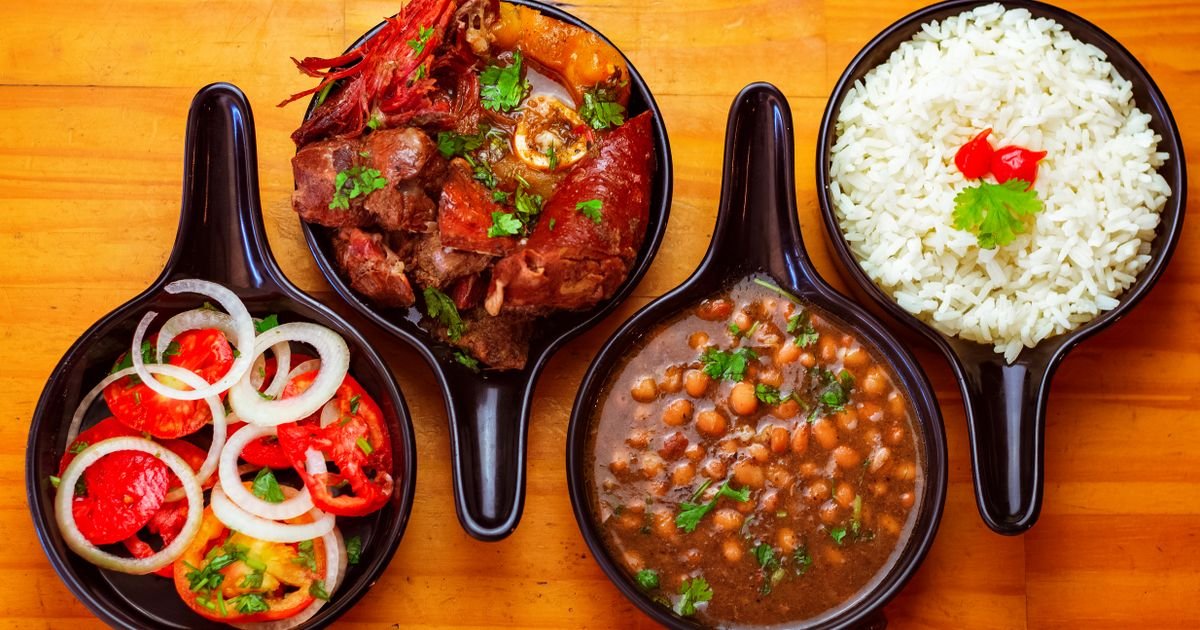
Beyond the dates, watch the local climate. In the northern hemisphere, winter favours soups, feijoada and hot dishes. In summer, meanwhile, açaí, pulps and ice cream grow fast. Consequently, the same importer can flip the mix twice a year without changing supplier.
Finally, talk to the exporter about the production window. Seasonal items such as panettone have a short run in Brazilian factories. Whoever confirms the order in August ships calmly; whoever orders in November rarely arrives in time.
How to enter the Brazilian nostalgia food market with the right partner
Understanding the Brazilian nostalgia food market is the first step. Operating in it consistently is the second, and that depends on reliable supply. Brazil House Export selects approved factories, consolidates the container and handles the export documentation.
As a result, you receive a shelf-ready mix without negotiating with ten different plants. Start with the product catalogue, see also how to build the Brazilian section in store and then request your quote. This market grows every year, and whoever sets up the operation first takes the space.
Frequently asked questions
Does this market only serve Brazilians?
No. It starts with the Brazilian community, but products such as açaí, pão de queijo and coffee win over local shoppers quickly.
Which countries hold the most potential?
The United States, Portugal, Japan, the United Kingdom, Canada and Spain hold the largest Brazilian communities.
Do I need to invest heavily to start?
No. A lean first shipment, with a few high-turn items, already reveals the real sales curve of your market.