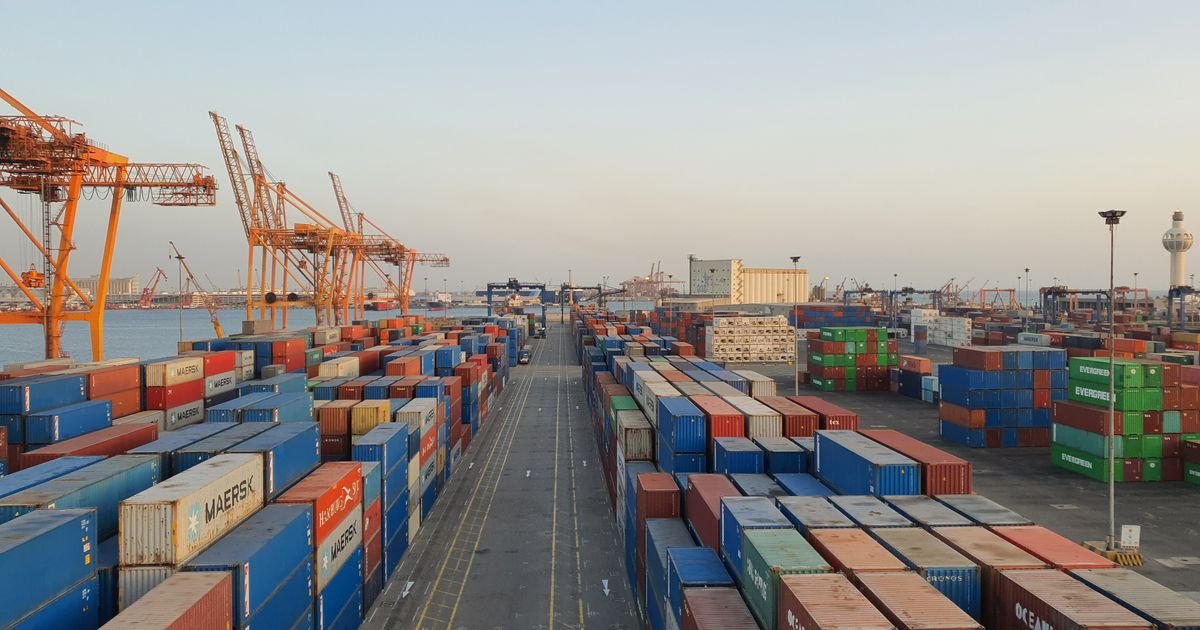

Importing a food container involves far more than the price on the supplier's invoice. The goods themselves usually account for little more than half of the final cost on your shelf. Therefore, buyers who build the full spreadsheet before placing the order negotiate better and price with confidence. This article opens every line of that calculation, in the order it actually appears.
When importing a food container, look at the cost per case
The number that matters is not what the container costs. It is what each case costs once it reaches your warehouse, ready to sell.
That metric has a name: landed cost. It adds everything up and divides by the number of units. This way, you compare different mixes fairly and find out which product really sustains the operation.
A common mistake shows up here: spreading freight equally across every item. Heavy products consume more capacity than light ones; therefore, the allocation should follow weight and volume.
Line 1: the goods
This is the only line almost everyone calculates well. Even so, two points deserve attention.
First, confirm whether the price includes export packaging and palletising. Second, check the minimum value per SKU. Buying two cases of a rare item usually works out proportionally very expensive.
Line 2: international freight
Ocean freight varies with the route, the time of year and the space available. It also changes a great deal between a dry container and a reefer, since refrigerated cargo draws power throughout the voyage.
For that reason, avoid working from a table rate. Ask for a quote for your route and your date, and redo the calculation on every order. In peak periods, the difference can change the viability of the whole mix.
Line 3: international insurance
Insurance usually represents a small fraction of the cargo value, and it almost always pays for itself. With food it matters even more: a single refrigeration failure can compromise the entire container.
Confirm whether the policy covers damage caused by temperature variation. Many basic covers do not, and that is precisely the most likely loss with frozen goods.
Line 4: duties and fees on arrival
This line changes completely from country to country, and it is the one that most often upsets optimistic spreadsheets. Three components normally apply:
- Import duty, set by the tariff classification of each product.
- Consumption taxes, such as VAT, sales tax or the local equivalent.
- Specific fees for health inspection and regulatory agency clearance.
In addition, trade agreements can reduce the rate against a certificate of origin. Therefore, it is worth checking whether your country has an agreement with Brazil before you accept the full rate.
Line 5: clearance, port and local transport
This covers the customs broker, port charges, container handling and transport to your warehouse. Add the return of the empty container as well.
With refrigerated cargo there is one more relevant cost: plugging the reefer in at the port. It is charged by period and grows quickly if clearance drags on.
Line 6: the cost almost everyone forgets
Storage. A food container rarely sells out in a week, and the stock occupies space for months.
Add warehouse rent, cold room energy, stock insurance and the cost of tied-up capital. Together they usually weigh more than international insurance, and they almost never appear on the first spreadsheet.
For example, a mix that turns quickly is worth more than a deep discount on a slow item. It is worth reviewing the list of best-selling Brazilian food products abroad before you commit volume.
How to reduce the cost of importing a food container
A few simple decisions improve the final figure considerably:
- Fill the container. Empty space costs the same as full space.
- Balance weight and volume. Combine drinks with light items, such as seasonings and biscuits.
- Negotiate CIF first and FOB later. Once you know the route, you book freight better.
- Group your orders. Two quarterly shipments cost less than four monthly ones.
- Check the tariff classification. A wrong code can double the duty for no reason.
None of these measures requires investment. All of them depend only on planning.
A spreadsheet routine for importing a food container
Build the spreadsheet with five columns per SKU: unit price, weight, volume, freight allocation and duties. Then add everything up and compare it with the selling price in your own market.
Next, check the margin per item, not the average margin. Almost always two or three products carry the result, while the others merely occupy space.
Finally, redo the calculation on every shipment. Exchange rates and freight move, and an old spreadsheet misleads easily.
A practical simulation for a 20-foot container
Numbers help more than theory. The simulation below is illustrative and shows the share of each line in the cost of importing a food container. Real figures change with route, exchange rate and category.
- Goods (FOB): usually 55% to 70% of the total cost delivered to the warehouse.
- Ocean freight and insurance: 8% to 20%, with wide variation by route and time of year.
- Import duties and fees: 5% to 20%, depending on the tariff classification of each item.
- Clearance, port and storage: 3% to 8%, and it climbs fast if the cargo sits still.
- Inland freight to the warehouse: 2% to 6%.
With those proportions in hand, the selling price calculation becomes more honest. Add everything up, divide by the number of units and apply the channel margin. Only then compare the result with the competitor's shelf price.
One important warning: demurrage and detention never appear in the initial budget, yet they destroy margin. They are daily charges for late return of the container. Therefore, having the paperwork ready before the vessel arrives is the cheapest way to save money.
Simulate the cost of importing a food container with us
Generic estimates help little when it is time to decide. For that reason, we build a real simulation for your mix, with the FOB price item by item, weight, cubage and volume per pallet. You compare it with the rates in your own country, which in Brazil follow the rules of the Receita Federal and at destination follow the local authority.
As a result, the final calculation stays transparent. Pick your items in the catalogue, see which products turn fastest and then request the quotation spreadsheet. Knowing the cost of importing a food container before you place the order is what separates a profitable operation from a bet.
Frequently asked questions
How much fits in a container?
A 20-foot container holds around 28 cubic metres, and a 40-foot one around 58. The weight limit also has to be respected.
Can I start without a full container?
You can. Consolidated cargo costs more per case, but it reduces the initial outlay and works well for testing the market.
Do you provide the full quotation?
Yes. We build the proposal around the chosen mix and the costs up to the destination port, so you can close the local side of the calculation.